In coffee shops, fast food restaurants, or food delivery windows, we consume billions of disposable cups every day. Among them, traditional paper cups are often mistaken for environmentally friendly choices due to their name “paper”. However, the truth is far more complex than we imagine. Today, we will delve into a more environmentally friendly alternative – biodegradable disposable cups, and reveal why it is a crucial step towards a green future.
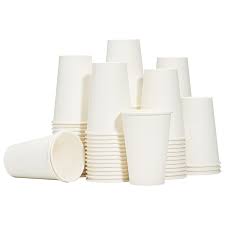
Act 1: The Misunderstood ‘Environmental Defender’ – The Hidden Cost of Traditional Paper Cups
To understand the advantages of biodegradable cups, we must first tear off the “green disguise” of traditional paper cups.
The core secret of traditional paper cups is that they are not purely “paper” cups. In order to accommodate hot drinks or prevent leakage, almost all traditional paper cups are covered with a thin layer of polyethylene (PE) plastic film on the inner wall.
This thin layer of plastic poses three major environmental challenges:
- Recycling dilemma: This layer of plastic film is tightly attached to the paper, making the separation cost extremely high, and most recycling factories in the region do not have the ability or willingness to handle them. Therefore, the vast majority of used paper cups are ultimately treated as general waste and sent to incineration plants or landfills.
- Degradation challenge: In landfills, the layer of plastic film greatly hinders the natural degradation of paper. A discarded paper cup may take decades to fully decompose, during which it may release greenhouse gases such as methane.
- Microplastic risk: During the slow decomposition process, plastic film will break into microplastics, which can enter soil and water sources, causing long-term and potential harm to ecosystems.
So, traditional paper cups are more like “plastic cups wrapped in paper”, and their environmental friendliness is greatly reduced.
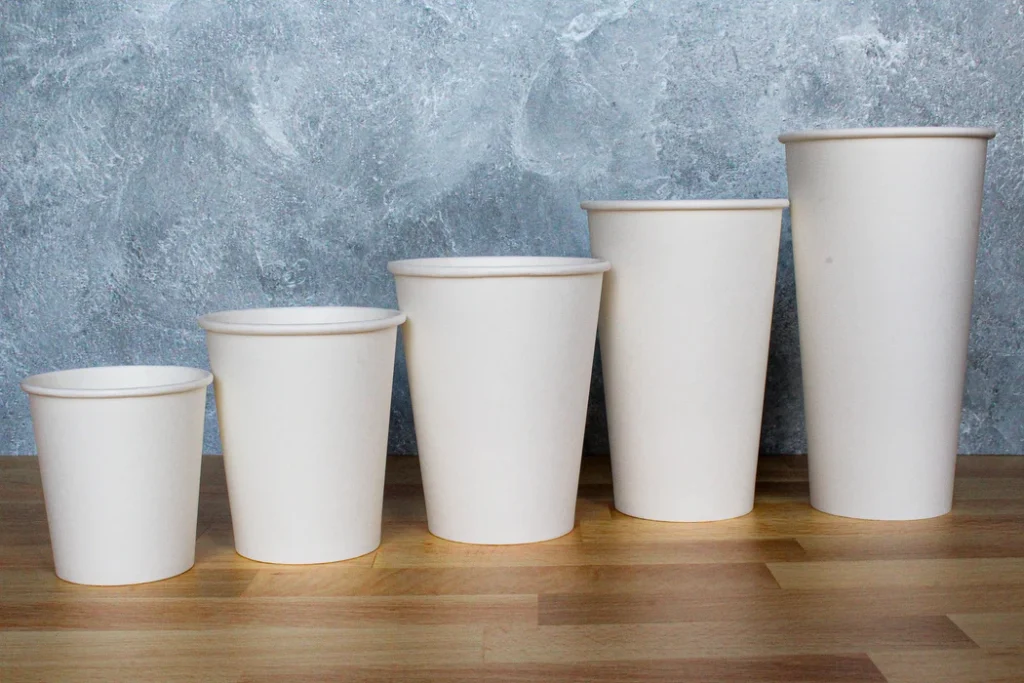
Act 2: True Green Innovation – The Environmental Benefits of Biodegradable Cups
Degradable cups, especially those that comply with international certification standards such as OK Compound Industrial, are designed from the outset to address the aforementioned challenges. Its environmental advantages are mainly reflected in the following aspects:
Advantage 1: Return to the closed-loop of nature – efficient degradation ability
This is the core advantage of biodegradable cups. The inner wall coating is not traditional plastic, but rather bio based plastics such as polylactic acid (PLA) derived from renewable resources, or other stackable materials.
·Under industrial composting conditions, these cups are sent to the industrial composting plant along with organic waste such as kitchen waste. Under specific temperature, humidity, oxygen, and microbial action, they can completely decompose into carbon dioxide, water, and nutrient rich humus within a few months, returning to the natural ecological cycle without leaving harmful residues.
·Contrastive: Compared with the traditional paper cup’s “decades long” degradation cycle, this is a qualitative leap from “almost no degradation” to “rapid biological cycle”.
Advantage 2: From “Fossil” to “Biomass” – Sustainability of Raw Materials
The main raw materials for many biodegradable cups, such as PLA, come from renewable plants such as corn, cassava, and sugarcane. This means:
·Reduce dependence on fossil fuels: no longer completely reliant on non renewable oil.
·Reducing carbon footprint: Plants absorb carbon dioxide through photosynthesis during their growth process, which helps achieve lower carbon emissions throughout the entire product lifecycle.
Advantage 3: Relieve the pressure of garbage disposal
When biodegradable cups are composted together with organic waste, they turn waste into treasure and become fertilizers that nourish the soil. This can not only reduce the burden on landfills, but also avoid air pollution caused by incineration, while creating valuable new products and promoting the transformation of “waste” into “resources”.
Views: 0