In today’s era, sustainable development has become a common goal pursued globally, and environmental awareness is increasingly strengthening in people’s lives. Every choice we make in our lives can have a profound impact on the environment, and the choice of tableware is one of them that cannot be ignored. Traditional plastic tableware brings convenience but also imposes a heavy burden on the environment. The emergence of biodegradable tableware provides new possibilities for our green lifestyle and is gradually becoming a popular choice for the catering industry and consumers.
1、 The dilemma of traditional plastic tableware
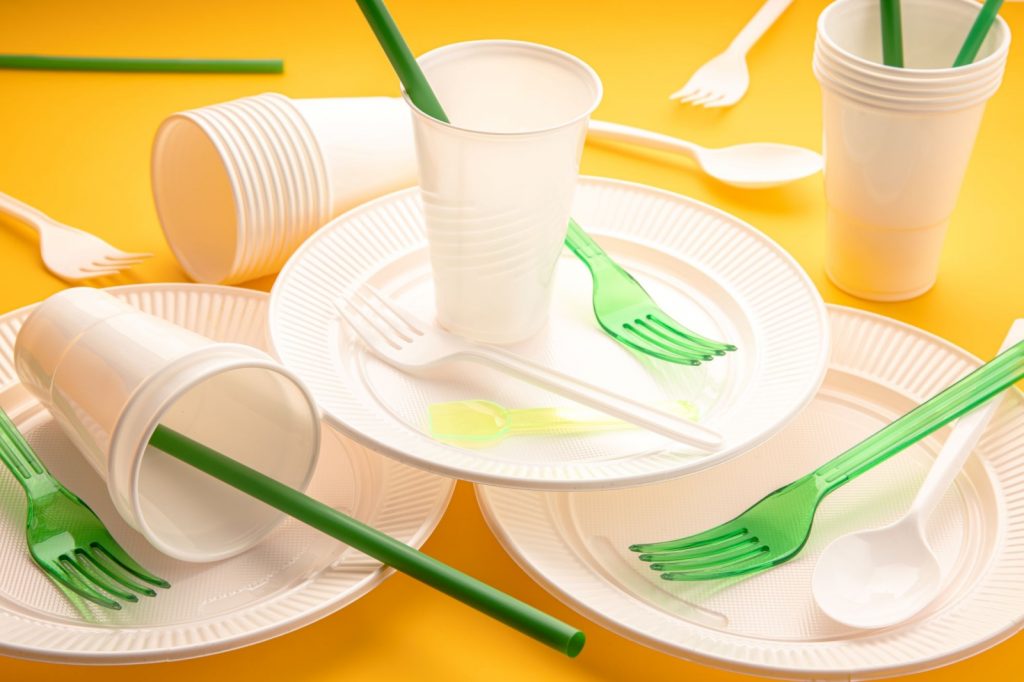
Traditional plastic tableware, such as common disposable plastic lunch boxes, knives and forks, straws, etc., have long held an important position in the catering industry due to their low cost, lightweight and portable nature, and resistance to breakage. However, over time, its drawbacks have become increasingly prominent.
From an environmental perspective, the degradation process of plastic tableware is extremely lengthy. According to scientific research, ordinary plastic tableware takes hundreds or even thousands of years to fully degrade in the natural environment, which means that the plastic tableware we casually discard will remain on Earth for several generations. A large amount of plastic waste accumulates in landfills, occupying valuable land resources. At the same time, they also release harmful chemicals during the degradation process, polluting soil and groundwater. What is even more severe is that millions of tons of plastic waste flow into the ocean every year, causing devastating damage to the marine ecosystem. Marine organisms often mistake plastic for food, leading to their death due to inability to digest it, posing a serious threat to the entire marine food chain.
In terms of health, plastic tableware also poses hidden dangers.When plastic tableware comes into contact with high-temperature food or beverages, chemicals such as plasticizers and bisphenol A may migrate into the food.After being ingested by the human body, these substances may interfere with the endocrine system, affect reproductive health, and increase the risk of diseases such as cancer.Especially for sensitive populations such as children, pregnant women, and the elderly, this potential harm cannot be ignored.
In terms of policies, in order to address the issue of plastic pollution, more and more countries and regions around the world have begun to implement strict plastic restrictions.The introduction of policies ranging from banning the use of certain types of disposable plastic tableware to imposing high taxes and fees on plastic products has led to increasing restrictions on the use of traditional plastic tableware. Enterprises need to bear higher compliance costs and potential penalty risks when using plastic tableware.
2、 The rise and advantages of biodegradable tableware
Faced with many problems with traditional plastic tableware, biodegradable tableware has emerged, which is gradually changing our catering ecology with its unique advantages.
1. Material source and environmental protection concept:
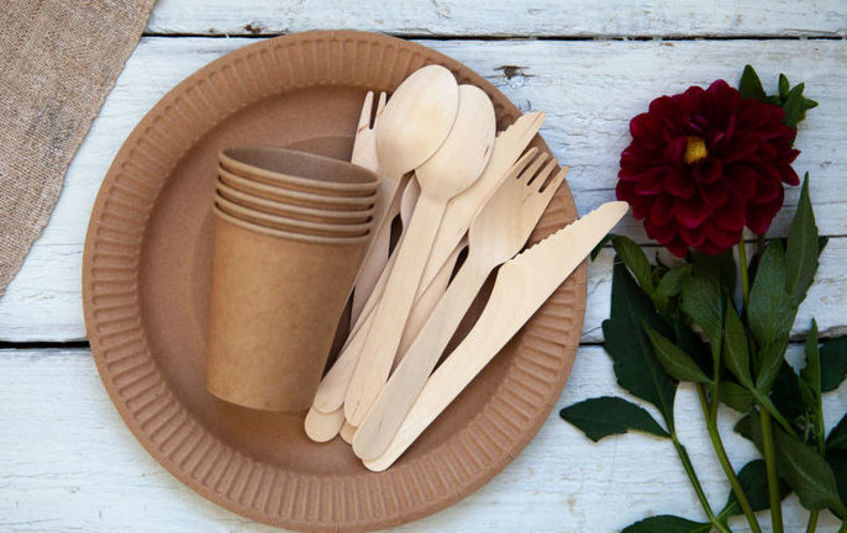
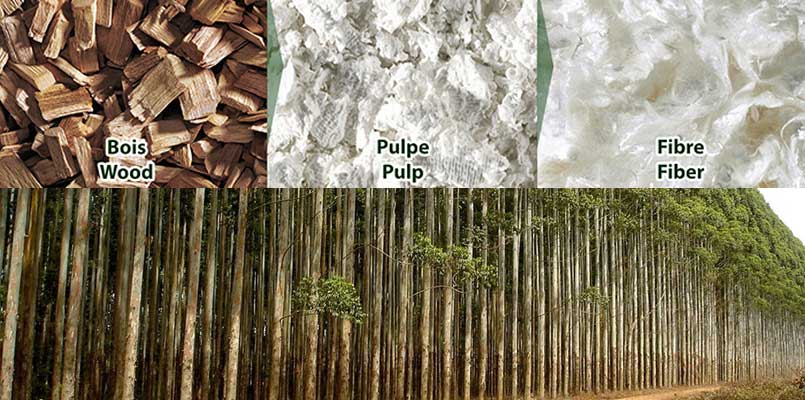
The raw materials for biodegradable tableware mainly come from renewable resources in nature, such as sugarcane bagasse, bamboo fiber, corn starch, straw, rice husk, etc. These materials were originally waste in agricultural production, but through innovative technological means, they have been transformed into practical tableware, achieving the recycling of resources. For example, sugarcane pulp tableware is made from the residue of sugarcane juice, which is processed through high-temperature disinfection, molding and other techniques. This not only solves the problem of processing sugarcane bagasse, but also reduces the exploitation of new resources. After completing their usage mission, these tableware can naturally decompose in a short period of time (usually several tens of days to several months) under natural conditions such as soil and compost, and ultimately convert into harmless substances such as carbon dioxide and water, returning to the natural cycle without leaving long-lasting pollution marks like plastic tableware.
2. Health protection
Biodegradable tableware does not add harmful chemicals during the production process, ensuring the health and safety of users from the source. After testing by authoritative institutions, these tableware meet strict food contact safety standards, such as SGS, FDA food grade certification, etc. Whether it is used to serve hot soup, hot rice, cold drinks, salads, etc., it will not release toxic or harmful substances, allowing consumers to use it with peace of mind, especially for family dining, children’s catering, and high-end catering venues. The health advantages of biodegradable tableware are more prominent.
3. Performance
In practical use, the performance of biodegradable tableware is also excellent, fully capable of meeting daily catering needs. For example, bamboo pulp tableware has high fiber strength and good temperature resistance, which can withstand temperatures of 120 ℃ or even higher, making it suitable for microwave heating; Meanwhile, bamboo itself contains the natural antibacterial ingredient “Zhukun”, which has inhibitory effects on common bacteria such as Escherichia coli and Staphylococcus aureus, effectively extending the shelf life of food. Although corn starch tableware has relatively weak moisture resistance, it has good density, water resistance, oil resistance, and impermeability in dry environments. It also has good flexibility and is not easily broken. Straw rice husk tableware is treated with a special coating to improve its waterproof performance to a certain extent, making it suitable for use in more scenarios.
4. Economic benefits and market potential
In the long run, using biodegradable tableware also has significant economic benefits. For catering enterprises, although the procurement cost of biodegradable tableware may be slightly higher than traditional plastic tableware, the cost is gradually decreasing with the growth of market demand and the expansion of production scale. At the same time, using environmentally friendly biodegradable tableware can enhance the brand image of the enterprise, attract more environmentally conscious consumers, and thus increase customer traffic and sales. According to data from market research institutions, more and more consumers are willing to pay higher prices for environmentally friendly products, which provides a broad space for the development of the biodegradable tableware market. Under the global trend of plastic prohibition, the market size of biodegradable tableware is showing a rapid growth trend, and it is expected to reach a market size of billions in the next few years, becoming a highly promising emerging industry.
3、 Diverse choices of biodegradable tableware
At present, there is a wide variety of biodegradable tableware on the market, and consumers can choose according to different usage scenarios and needs.
- Sugarcane pulp tableware: It has good toughness and stiffness, a smooth surface, and a texture similar to traditional plastic tableware.Its degradation rate is fast, and it can be completely degraded in soil in about 120 days, with carbon emissions only one-third of plastics.Suitable for fast food delivery, picnics, outdoor barbecues, and other scenarios, common products include meal boxes, plates, bowls, spoons, etc.
- Bamboo pulp tableware: It retains the natural texture and color of bamboo, giving people a natural and fresh feeling.In addition to the high strength, temperature resistance, and antibacterial properties mentioned earlier, bamboo grows rapidly and is a sustainable raw material.Bamboo pulp tableware can be used for daily family dining, restaurant dining, hotel room service, etc. The product forms are diverse, including chopsticks, knives and forks, plates, cups, etc.
- Corn starch tableware: The texture is relatively soft and has a gentle touch.Its biggest feature is that it can decompose in just 28 days under composting conditions, making it very suitable for disposable catering occasions such as exhibitions, events, school canteens, etc.However, due to its poor moisture resistance, it is necessary to pay attention to keeping it dry during storage and use.
Common corn starch tableware products include disposable bowls, plates, knife fork spoon sets, etc. - Straw and rice husk tableware: It fully utilizes agricultural waste and embodies the environmental protection concept of resource reuse.After special treatment, straw rice husk tableware has certain waterproof and oil resistant properties, which can meet basic catering needs.Its price is relatively affordable and suitable for cost sensitive businesses such as snack stalls, roadside stalls, small restaurants, etc. Its products mainly include meal boxes, bowls, trays, etc.
4、 Join hands and move towards a green future
Choosing biodegradable tableware is not only to meet current environmental needs, but also for our future generations and the future of the earth. Every time biodegradable tableware is used, it is a gentle care for the environment and a practice of the concept of sustainable development.
For catering enterprises, adopting biodegradable tableware is a wise move to enhance their corporate social responsibility image and attract more customers; For consumers, choosing biodegradable tableware is a simple and effective environmental action that can contribute to protecting the environment in their daily lives. Let’s take action together to replace traditional plastic tableware with biodegradable ones, support the green mission, and create a cleaner and better tomorrow for the earth.
Views: 0